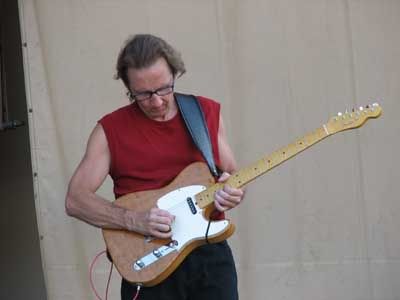
MtlLady wrote:MtlLady wrote:[But - considering most of DDY's music is from the 80's, isn't that what Tommy's guitar is *supposed* to sound like? I know that I want to hear what the songs sounded like then.
Personally, I think he's an even better musician to be able to adapt to whatever style he needs. But I'm no expert - I just know what makes my ears happy!

You make a good point. Should he try to match the album or should he go with what's the rage these days. Most other guitarists in similar positions have changed up how they play and sound. There has been a big backlash in the guitar community against overprocessed eighties sounds.
Eric
Which means he has to be comfortable enough with his guitar abilities to be able to stand against the backlash and stick with the original sound. I would think there would be a bigger backlash (and some angry DDY fans) if he changed the sound.
He must have other projects where he can go with what is a more the rage.
Thanks for your post, I've learned something today!!
Well the backlash really isn't a personal thing. It's more about what is wanted in the world of the studio musician. Back in the eighties you could literaly show up to do a session at a studio and you would bring your rack of effects and preamps. Much of the time you would either be taped by plugging directly in from this rack or plugging the rack into a guitar amp. Either way what you were hearing on the tape was mostly the rack and not the guitar and amp. In those days you could plug a strat or les paul guitar into the same rig and they would come out sounding almost the same. Often included in that rack of gear was a device called a Rockman invented by Tom Scholtz of the band Boston. This little device was used in thousands of recordings in the eighties. It was meant to simulate the sound of a cranked Marshall amp and simplify the recording process. It interfaced perfectly with session guitarists rack effects, especially on the clean setting.
These days studio guitarists typically try and find out what the client wants them to sound like and picks an appropriate guitar and amplifier. The sounds most in demand these days are a guitar plugged straight into a high quality tube amp (Fender, Vox, Marshall, Matchless, etc...) with maybe an effects pedal (the little things you see on stage guitarists stomp on) or two. It's also common for the studio's to maintain a stable of these types of amps so the guitarist doesn't need to bring a thing. The goal of this approach is to make the guitar sound much more organic than the guitars you would hear in the eighties. It is a very old school approach and was how most records were recorded until the eighties. It's kind of funny how things come full circle. There is a twist. There are devices like the Line6 POD that do what a Rockman does only they simulate an entire roomful of vintage and modern amps and do a much better job than the Rockman. In addition to my status as a tube amp snob I own one of these devices and they are a lot of fun. Many of the recordings you hear these days, especially commercial jingles, are cut using a POD like device.
I can't speak for Tommy D. but sometimes the eighties guys are loathe to give up their equipment and sound as it's what they have become familiar and comfortable. I did notice on the Dennis DVD that he has some decent amplifiers up there on stage. I do know Tommy D. is a studio guy so I'm sure he's probably got a great collection of guitars and amps.
Years ago I read an interview with Trevor Rabin who is a renown composer as well as a member of Yes during their 80's era. He talked about what the recording industry refers to as the, "eighties stain". What he's refering to is the way recordings sounded in the eighties. In the eighties everything was big. The drums sounded huge and oftentimes electronic, guitars sounded mostly the same (the overprocessed sounds I'm complaining about), tons of reverb on the vocals. The problem with the eighties stain is that the recordings from a production standpoint really don't hold up to how most industry people want recordings to sound. Let me put it this way, you wouldn't want to record someone like Snow Patrol with the same techniques and instruments that were used for a Mr. Mister record in the eighties. You could however, record Snow Patrol with the same techniques used in the seventies because the process (aside from using computers vs.tape recorders) is mostly the same. In other words the eighties presented us with a lot of experimental recording techniques that are not considered good these days. The first solo albums by Dennis and Tommy were full of these types of sounds. Think of the guitar tones on Desert Moon and the amount of reverb used on Little Girl World. If Dennis and Tommy both recut their first two efforts these days they would sound a lot different and I think a lot better. Most of the eighties artists that are doing tours today have updated their sound in an effort to get rid of some of this eighties stain. My biggest gripe with the production on Dennis' solo albums has been the guitar tones. The reason I liked the sound of the Canadian house band better than Dennis' current group is that their guitar tone was a lot more modern and less processed. It gave the songs an updated sound and sounded much better to my ears.
Sheesh, I could go on and on!
Eric
 Posted: Sun Nov 19, 2006 3:10 pm
 I know you're a HUGE Tommy D fan.